

Posted On : August 7, 2025
The Ultimate Guide to Paraphernalia Drugs: What You Need to Know
You may not realize it, but the biggest warning signs of drug use often aren’t the drugs themselves — they’re the everyday items left behind.
That burnt spoon in the drawer. The small plastic bag was tucked into a backpack. The pen that no longer writes. These could all be signs of paraphernalia drug— and missing them could mean missing a silent cry for help.
As drug culture evolves, especially among teens, so do the tools used to hide it. Parents and guardians are often the first line of defense, but many don’t know what to look for.
This guide is here to change that.
We’ll break down what paraphernalia drugs are, show you the most common examples, and help you recognize behavioral red flags. More importantly, we’ll walk you through what to do next — from starting that difficult conversation to finding professional support like rehab for teenagers near me.
When you call our helpline, an admissions navigator is there to listen to you, answer any questions you have, and provide the support that you need—all 100% confidentially.
Drug paraphernalia is any equipment, product, or material that has been altered for the making, use, testing, or concealment of illegal substances. Typical examples are glass pipes and bongs, little spoons, roach clips, and altered household objects such as tin foil or emptied-out pens.
In simple terms, paraphernalia drugs is hardware and accessories for using, preparing, or concealing illicit drugs. They include clear ones, such as syringes and pipes, to everyday items that have been altered for use with drugs.
What makes this more problematic is that some of these items are okay to have in other situations. A glass pipe purchased at a shop may be marked “for tobacco use only,” but it is as likely to be used for meth. A spoon in the kitchen drawer may have a more sinister purpose if surrounded by burn marks or residue.
That’s why it’s important to be knowledgeable about the types of drug paraphernalia — and how they’re used.
Paraphernalia can be:
While one item doesn’t guarantee drug use, context and pattern do enter into the equation. If you see unusual behavior coupled with the use of suspicious material, it’s time to investigate further.
Knowing what to search for can make all the difference. Too often, these types of items are overlooked or dismissed as harmless unless you recognize their possible drug link.
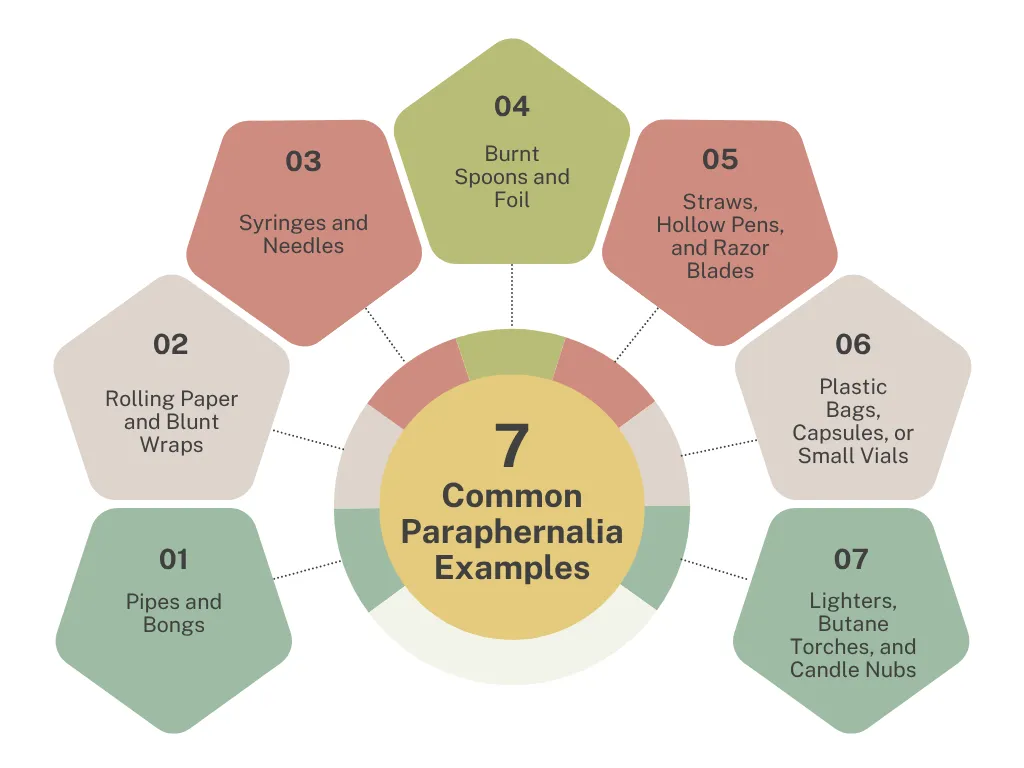
Examples below and types of drug paraphernalia that you may find:
Approaching your child about potential drug use is never easy. But silence, assumptions, or confrontation won’t help either. The most effective approach is grounded in calm, open, and compassionate communication — even when you’re feeling overwhelmed.
Here are some tips from The Substance Parents Guide:
Your teen won’t tell you at first, but establishing a safe environment for talking lays the groundwork for trust that will lead to long-term healing.
We’ll instantly check the coverage offered by your insurance provider.
If the signs are centered on drug abuse, then you require professional assistance. Searching for rehab for teenagers near me is a daunting action to undertake, but it is one of the most desirable actions you can ever accomplish for your child’s life.

Teenagers need different treatment from adults. Their social life, emotions, and brain are in the process of developing, and a rehab center that is specifically designed for adolescents provides them with the structure, security, and resources they require for healing.
When you join GoRehabs.com, we introduce you to personalized rehab programs that address not only addiction but also emotional trauma associated with it. If your teen is dabbling or fighting internal demons, the earlier you can get rehab for teenagers near me, the sooner.
Rehab for teenagers near me is not only about treatment, it’s about providing your child with a second chance at life, on a healthier track.
The signs can be quiet. A misplaced spoon, food stuck in a drawer where you store socks, a mood change you can’t quite pinpoint.
Those signs could mean your child is fighting quietly.
Learning about paraphernalia drugs, familiarization with drug paraphernalia forms, and knowing how to spot behavioral and emotional changes can give you the power of early intervention.
You’re not alone. And you don’t have to have all the answers today, you just have to have the courage to ask the right questions and the desire to keep going.
If you’re waving red flags and looking for rehab for teenagers near me, it’s time to scream for help. Your child’s future is worth it.
Go to gorehabs today to find out how we can help.
All the items such as different accessories, hardware, etc. that are used to consume drugs are referred to as drug paraphernalia. It could be a used syringe, a glass pipe or even a kitchen spoon.
The parent or the loved one needs to be vigilant if they suspect drug paraphernalia. It is something to be loud about and not to be shoved under the carpet. For instance, if you see a burnt spoon in the drawer or some kind of rolling paper with residue on top of it, it is most likely to be drug paraphernalia.
Some common examples of drug paraphernalia are razor blades, lighters, capsules, burnt spoons, candle nubs, butane torches, etc.
The most common synonym for drug paraphernalia is drug-related equipment or tools.