
Posted On : June 25, 2026
60-Day Rehab Programs: What to Expect During Two Months of Residential Treatment
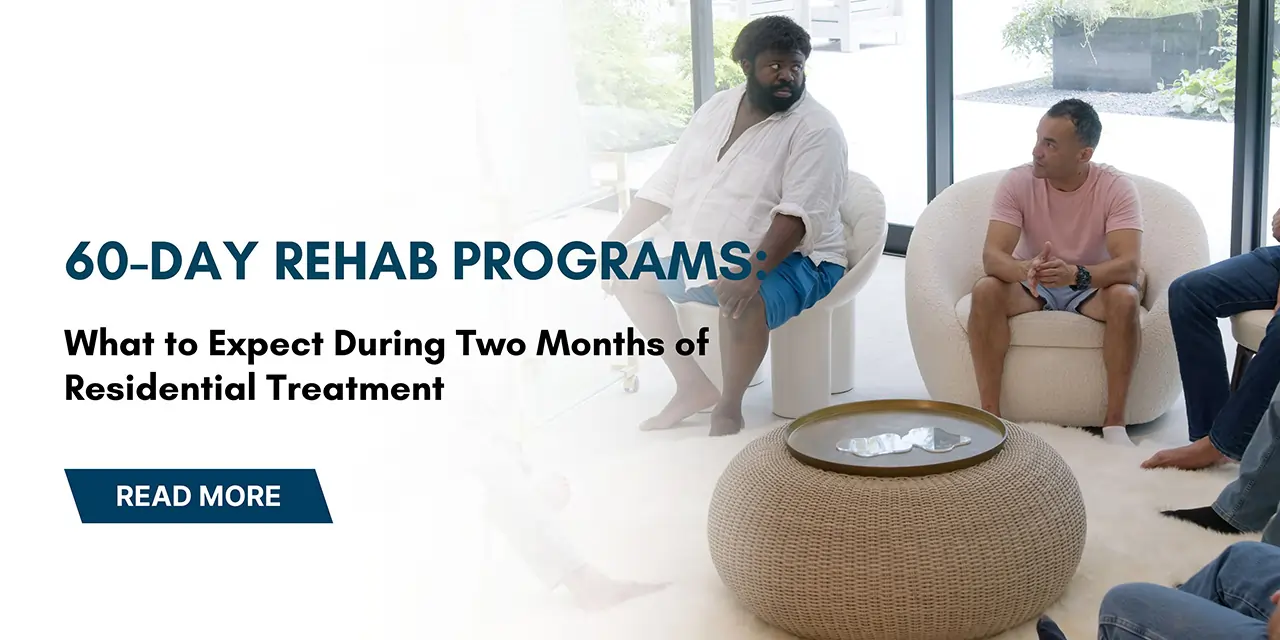
There are so many different kinds of treatment programs that are available for a person suffering from alcoholism and substance abuse. A lot of people opt for a 60-day treatment program to ensure long-term sobriety and convalescence. It is not easy to deal with addiction; as a matter of fact, it is debilitating not only for the person who is undergoing addiction but also for the loved ones. This is the prime reason that people opt for 60 –day rehab programs so that they can tackle their problem of addiction head-on.
What exactly is a 60-day treatment program?
You might be confused about what a 60-day rehab is. Is it a residential treatment plan, or can you opt for it as a day care treatment option? A 60-day rehab treatment is a two-month-long treatment for addiction, which offers people a considerable time to get rid of their addiction. A person can go in for whatever suits him. Both residential treatment and outpatient treatment options are available. All those who want greater flexibility and want to carry on with their regular life along with treatment, opt for an outpatient format. So, if your support system at home is robust, an outpatient treatment plan will work best for you.

On the other hand, if your addiction is severe and you are not able to handle your problem, then you should go for an inpatient or residential treatment plan. In an inpatient plan, the person has to live in the facility, and there is constant supervision of therapists and clinicians. As the duration of the 60-day treatment plan is longer, the chances of relapse fall drastically. So, if you are looking for an ideal setting to get rid of your addiction, you must try searching the web for a 60-day rehab near me. The best way is to log in to gorehabs, and you will get in touch with the best service providers in your area.
When you call our helpline, an admissions navigator is there to listen to you, answer any questions you have, and provide the support that you need—all 100% confidentially.
Always go for a treatment plan that has been tailored to meet your needs and requirements. However, in a 60-day treatment plan, each person has to go through different things that stay common for all.
Medical Detox– The first thing that is necessary for anyone who is facing addiction is detox. This stage is pretty uncomfortable, and the person might go through some dangerous symptoms that require medical supervision. In this stage, the body gets rid of alcohol or any kind of substance from the body. When you are under the supervision of a doctor, they try to make the process as comfortable and safe for you as possible.
Individual Therapy– After the medical detox comes individual therapy. Now, in this, the therapists work individually with the patient. There is a one-on-one session to understand the cause behind addiction. A plan is made to address the underlying physical and mental issues. When the triggers are addressed, a person is in a better position to handle the problem.
Group Therapy– When an individual goes for group therapy, he or she is able to meet people who are undergoing similar conditions. This gives a lot of hope, and you can come out of the guilt and shame that accompany addiction.

You feel that you are putting effort into getting rid of something that has trapped you, and this automatically leads to favourable outcomes. You can even join support groups where you get the right kind of assistance and support from people, even once treatment is over.
Life Skills Training– In a 60-day program, people also receive life skills training. This helps them handle their triggers effectively. Financial issues, peer pressure, stress, etc., can again lead a person to addiction, but if you know how to cope with them, you will be able to stay sober.
Let us give you an idea of why going for a 60-day addiction treatment is a better proposition.
| Aspect | 60-Day Addiction Treatment Program | Regular / Short-Term Program (Often 7–30 Days) |
|---|---|---|
| Time for Detox and Stabilisation | You get enough time for withdrawal symptoms and cravings to go down | It ends before the body and mind fully stabilise |
| Building Healthy Habits | More time to inculcate healthy routines such as exercise, sleep schedules, etc | Not enough time to form long-lasting habits |
| Therapy Depth | Therapy sessions address the root causes of addiction | Therapy may focus on immediate issues |
| Mental Health Support | Issues like depression and trauma are also dealt with | Mental health concerns are not fully addressed. |
| Relapse Prevention | Less probability of relapse | Relapse prevention training is very brief. |
| Family Involvement | Families can participate in counselling and rebuilding trust | Less time for family education and healing |
| Adjustment to Sober Living | Gradual transition to a drug-free lifestyle | Return to outside triggers is faster than anticipated |
| Peer Support | Stronger relationships with supportive peers in recovery | Less time to build a support network |
| Confidence and Motivation | A longer success period can improve self-confidence and commitment | Some people may leave before feeling ready |
| Treatment Personalization | Staff can adjust treatment plans based on progress over time | Fewer opportunities to adapt the program |
| Risk of Early Relapse | Often lower because recovery skills are practised longer | Higher risk if treatment ends too quickly |
| Focus on Long-Term Recovery | Encourages lifestyle change, not just stopping substance use | Sometimes focused mainly on short-term sobriety |
| Education & Life Skills | More time for job readiness, communication, and stress-management training | Limited life-skills development |
| Aftercare Planning | Detailed discharge as well as recovery planning is offered | Aftercare planning is not that great |
| Overall Benefit | It is ideal for people who need recovery time. | Better for those suffering from mild addiction |
So, whatever program you go in for to tackle your addiction, choose the one based on your need, financial condition, family history, etc. “The main advantage that you get with a 60-day plan is that there is enough time for you to adjust to your new way of living. You cannot develop good habits in a jiffy. It takes time, and you should give your body and mind that much time so that no relapse happens later on. Addiction is not an easy thing to handle. So, offer your body the care and love that its deserves, then only you will be able to get rid of the monster of addiction from your life.