

Posted On : July 3, 2025
Discuss the Implications of Long-Term Use of Lunesta Sleeping Pills, Including Potential Dependence and Withdrawal Symptoms
It is extremely hard if you are battling any kind of sleep issues. In most cases, either people find it difficult to sleep, or what happens to them is that they get up several times during the night, and this leaves them troubled. Those who have trouble falling asleep have turned to Lunesta sleeping pills. The impact of this drug is that an individual tends to fall asleep faster, and the number of sleeping hours also increases.
Now, there are chances that people get hooked on Lunesta. If not done carefully, there can even be even overdose of this sleeping pill medication. The generic name for this medication is eszopiclone. Lunesta is a sedative-hypnotic drug. If you take it for the short term, it is extremely beneficial; however, long-term use of Lunesta can lead to dependence and even serious withdrawal.
Here we will talk about the effects of long-term use of Lunesta sleeping pills, the side effects of Lunesta, and Lunesta withdrawal symptoms.
Lunesta belongs to a class of drugs that are known to inhibit neural activity. They calm the brain and this leads to sleep. So, for those struggling with sleep disorders, this drug is a big help as it enables you to calm down. There is a chemical in the brain that is called GABA, which helps you feel relaxed and sleep. When you consume these pills, make sure you get 7-8 hours of sleep after that. Also, do not mix it with alcohol as it can have serious implications.

Initially, it was thought that sleeping pills had a lower risk of dependence and fewer next-day residual effects. So it would be prescribed for short-term management of insomnia, usually no longer than a few weeks. However, later it was discovered that the nature of insomnia is chronic; people get hooked on Lunesta sleeping pills and have a very hard time getting off them. This has raised concerns regarding safety and dependence.
When you call our helpline, an admissions navigator is there to listen to you, answer any questions you have, and provide the support that you need—all 100% confidentially.
Lunesta sleeping pills have been observed to be extremely effective in promoting better sleep onset as well as their maintenance. In some patients, immediate relief and improved sleep duration have been seen. It, without a doubt, improves overall sleep quality. But eventually people develop tolerance to the drug, so consequently they might require higher dosages of the drug to get the same effect.
While some studies suggest Lunesta maintains its efficacy for up to six months, other research indicates that the benefits wane as the body becomes accustomed to the drug. At this point, users may feel compelled to increase their dosage or carry on using the medication further than the recommended time, and this leads to dependence.
Despite being classified as a non-benzodiazepine, Lunesta sleeping pills carry a moderate risk of psychological as well as physical dependence. And this particularly arises when you consume them over the long term. This means that you are not able to function normally when you do not consume this drug. Individuals using Lunesta may find it increasingly difficult to fall asleep without the medication, even if the underlying cause of insomnia has been resolved.
This dependence is not purely physiological; sometimes it is the psychological dependence that makes a person consume it. Individuals may become convinced that they will not be able to sleep without this pill; this reinforces habitual use and creates a cycle that is very hard to break. Moreover, Lunesta has been misused recreationally in some cases for its sedative effects, further emphasizing its abuse potential.
If you stop taking Lunesta after prolonged use, you will see withdrawal symptoms in your body, in some cases, these can be severe. Withdrawal occurs when the drug is abruptly stopped and the body, accustomed to its presence, reacts to its absence.
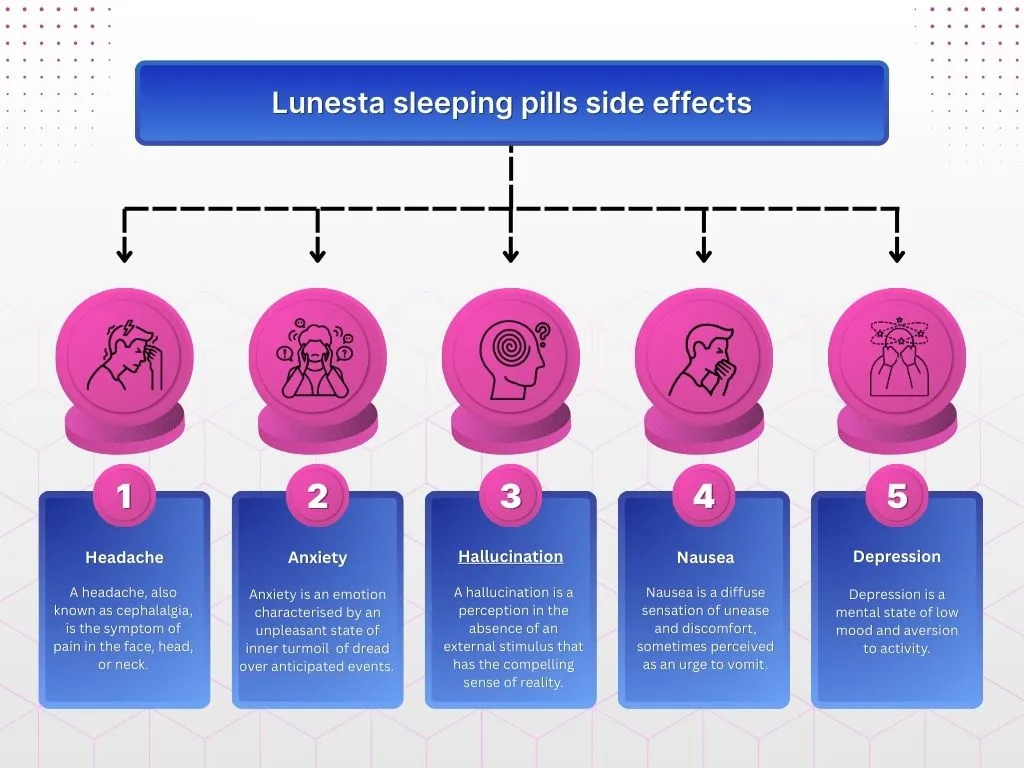
In very rare cases, especially if a person has consumed high doses for a prolonged period, symptoms can be intense, such as seizures or hallucinations. So, it is better to taper the use of drugs rather than stop them abruptly. All this should be done under supervision.
We’ll instantly check the coverage offered by your insurance provider.
Another concern with prolonged Lunesta use is its effect on cognition as well as the behavior of a person. Some users have reported memory lapses, confusion, and daytime drowsiness. This interferes with daily activities and reduces their overall quality of life. More alarming are reports of complex sleep behaviors, such as sleep-driving, sleep-eating, or sleepwalking. All these pose huge safety risks.
To reduce all the risks that are linked with long-term Lunesta use, several strategies need to be considered:
Even though Lunesta can offer short-term relief for individuals suffering from insomnia, its long-term use comes with a wide array of risks, including tolerance, dependence, and in a few cases, very serious withdrawal symptoms. These effects can compromise both physical and mental health, potentially exacerbating the very issues the medication is intended to treat. Therefore, Lunesta sleeping pills should be used cautiously and that too strict medical supervision.
Awareness of the drug’s limitations as well as potential harms is vital for both patients and healthcare providers. This will help them make informed decisions regarding their use. Log on to GoRehab.com to seek help with Lunesta pill addiction. With them, you will get professional support and a structured treatment plan for your problem.