

Posted On : June 2, 2026
How to Talk to a Loved One About the 7 Steps of Addiction
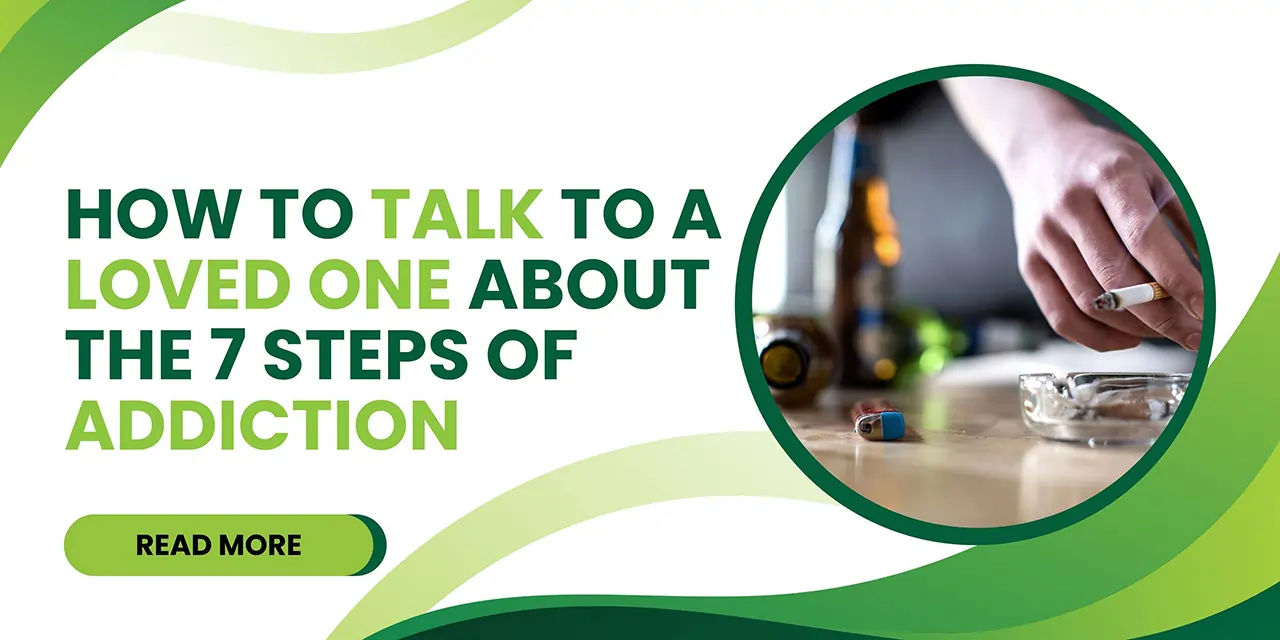
When you have to talk to your loved one or anyone very close to you about the 7 steps of addiction, it is very hard to find the right words so that neither the person feels offended nor overwhelmed. Any kind of addiction, whether it is alcoholism or substance addiction, can be cured if you follow these steps. The problem crops up because in most of the cases people are not ready to talk about addiction.
When you talk to drug addicts, they are a little uncomfortable. Now, this is not an uncommon behaviour. And if you are ready to embrace this most challenging job, this article will offer you all the tools as well as strategies to support your loved one manoeuvre his or her way through addiction towards sobriety. All that is needed is that you build up an atmosphere of compassion and support for your loved one. Create firm boundaries so that the person does not feel violated.
When you call our helpline, an admissions navigator is there to listen to you, answer any questions you have, and provide the support that you need—all 100% confidentially.

Stick to Use of “I” statements- Now, when you talk to someone from your perspective, like you have a problem or you are concerned, this makes the person feel defensive. When someone feels he or she is not being attacked, there will be much better communication.

Your point of view will be listened to, and this can be a win-win for both of you. Always keep in mind the family dynamics when you talk about this issue. It is significant that you understand your role and the person who is addicted his / her role in the family. This will help you frame your conversation in a better way.
Talk about the impact on addiction socially, financially and emotionally. This will make the person understand that you are genuinely worried about his/ her wellbeing and this is not just to put him/ her in a tight spot.
So, these are some of the ways you can talk to your loved ones about the 7 steps of addiction. Without a doubt it is a hard task, but not impossible. Your loved one may deny that they have a problem or become defensive, but your task is not to give up. Keep trying so that you are victorious at the end. Do not let that play the deflect game.
The best time to have this conversation is when your loved one is not in an inebriated condition. He/ she should have an open mind because only then can a positive outcome be achieved.
Boundaries are like a safe space for your mental and emotional health. They prevent enabling behaviours,which can unintentionally prolong the addiction.
Yes, many people recover with the right combination of treatment, support, and commitment. Recovery is an ongoing process and not a quick fix. There can be setbacks—but long-term sobriety is, without a doubt, a possible outcome
Explaining the benefits of the “7 steps of addiction recovery” to a loved one can feel tricky—you should not sound as if you are lecturing someone. The key is to keep it simple, relatable, and focused on how it helps them, not just the process itself.