

Posted On : June 19, 2025
The Sobering Truth: How Alcohol Depressant Properties Can Impact Mental Health
Have you ever realized what havoc alcohol consumption can wreak on you? The alcohol-depressant effects can ruin your mental health. It can be debilitating and devastating and you might battle with what is happening to you. Alcohol affects the nervous system in ways we might not even understand. Alcohol is one of the most widely consumed substances across the globe. Some take it for pleasure and fun, while some get addicted and cannot seem to function properly without its use.
Many people link alcohol consumption with relaxation, socialization, and stress relief. However, this is not the real thing. With alcohol might you might get some temporary relief and feel nice about yourself. However, in the long run, your mental health can be seriously impacted due to alcohol. The exciting impact of alcohol is just a pretense. Alcohol is primarily a depressant, which means that it will slow down the capacity of your central nervous system. It has an adverse influence on overall brain function, mood, and, in general, mental well-being. Understanding alcohol’s depressant effects is pivotal in understanding its potential dangers. It has a deep impact on individuals struggling with mental health issues.
Most people have an opinion that alcohol is something that will make you feel invigorated and energized. This belief comes from its initial effects. People usually become talkative post alcohol. Their inhibitions come down, and there is a short-term improvement in mood. However, these effects are short-lived and result from alcohol depressing the brain’s inhibitory controls. As an individual continues to consume alcohol, alcohol’s depressant effects emerge. This causes slowed cognitive function, impaired coordination, as well as drowsiness.
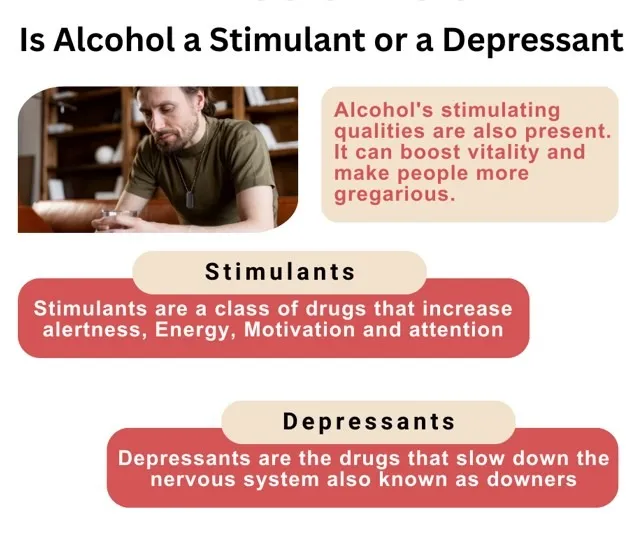
The main reason why we classify alcohol as a depressant is its effect on neurotransmitters, particularly gamma-aminobutyric acid (GABA) and glutamate. The neurotransmitter GABA is the one that induces feelings of calm and relaxation, whereas it is glutamate is an excitatory neurotransmitter. It is responsible for brain activity as well as energy. Alcohol makes GABA’s effects, whereas suppressing glutamate causes slowed reactions, drowsiness, etc. When consumed in bigger amounts, alcohol can even cause sedation. In some cases, individuals feel unconscious.
When you call our helpline, an admissions navigator is there to listen to you, answer any questions you have, and provide the support that you need—all 100% confidentially.
The two main components of the central nervous system are-
Both of these control everything from movement and speech to memory and emotions. Alcohol’s depressant effects hinder these functions, and this usually leads to:
When you consume alcohol for a long time, it can exacerbate or even trigger mental health issues. The alcohol depressant effects often lead to:

We’ll instantly check the coverage offered by your insurance provider.
Alcohol dependency develops as the brain adjusts to frequent depressant effects. Over time, the body compensates by increasing glutamate activity to counteract alcohol-induced sedation. This adaptation results in tolerance, requiring higher alcohol consumption to achieve the same effects. When alcohol is removed, the body struggles to rebalance, leading to withdrawal symptoms such as anxiety, insomnia, tremors, and, in serious cases, even seizures.
The nervous system has a remarkable ability to heal, but the extent of recovery depends on the severity of alcohol use. Short-term effects, such as mild cognitive impairments, often improve with abstinence and healthy lifestyle changes. It is seen that a person who does prolonged alcohol abuse can get Wernicke-Korsakoff syndrome (this is a severe brain disorder that is caused due to thiamine deficiency).
To support recovery, individuals can:
In the end, now we all know that alcohol only offers temporary relaxation. In the long term, it has depressant effects on the central nervous system. Your mental health can be seriously impacted. When you realize that alcohol is primarily a depressant, it enables you to make informed decisions as regards alcohol consumption. You also recognize the risks that are linked with excessive drinking. If alcohol use is interfering with mental well-being, it is vital to seek professional guidance. This is a crucial step that will lead to recovery as well as long-term health benefits.
Log on to gorehabs and get in touch with a trained practitioner who can give you the right guidance regarding alcohol abuse and your journey to sobriety.