

Posted On : January 9, 2026
Understanding the Difference Between Anti-Social Behavior Disorder and Borderline Personality Disorder

When it comes to mental health, we often get confused whether a person is exhibiting anti- social behavior or is battling with a personality disorder. On the surface, the symptoms of both conditions appear to be the same. However, if we delve deeper, we will realize that Antisocial Behavior Disorder (often called Antisocial Personality Disorder) and Borderline Personality Disorder (BPD) are two separate things.
Let us understand the difference between antisocial personality behavior and personality behavior disorder.
When you call our helpline, an admissions navigator is there to listen to you, answer any questions you have, and provide the support that you need—all 100% confidentially.
Antisocial Behavior Disorder, also referred to as Antisocial Personality Behavior Disorder, is a mental health condition in which an individual consistently ignores or violates the rights of others. People afflicted with this disorder do not have any regard for rules, laws, or social norms.
They may lie, cheat, or manipulate others, and all of this happens without any guilt or regret. This behavior disorder has its roots in childhood or early teenage years, and more often than not, it continues into adulthood.
Not every person who breaks the rules has antisocial personality behavior, but if these actions become a pattern, it can cause grave problems both at work and in relationships. This points towards antisocial disorder symptoms.
On the other hand, Borderline Personality Disorder (BPD) is not akin to antisocial personality behavior disorder. People with BPD often struggle with their emotions, self-image, and relationships. They tend to feel things a lot more intensely and switch quickly between emotional highs and lows.
Unlike antisocial personality behavior disorder, which is marked by a lack of empathy and disregard for others, people with BPD tend to fear being abandoned and often feel very insecure.
We’ll instantly check the coverage offered by your insurance provider.
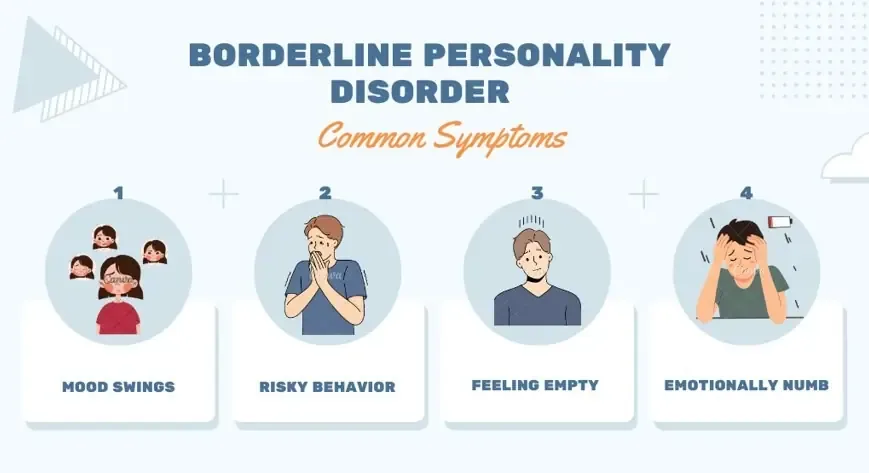
People with Borderline Personality Disorder do feel guilt or regret. They even experience deep emotional pain. They may act in ways that are harmful to others and even to their own selves, but their intention is not to harm other people.
Although both are personality behavior disorders, the key differences between Antisocial Behavior Disorder and Borderline Personality Disorder lie in emotional depth, motivation, and relationships.
Both Antisocial Personality Behavior Disorder and Borderline Personality Disorder develop from a mélange of genetic, biological, and environmental factors.
It is vital to bear in mind that not everyone with these risk factors will acquire these disorders. But early intervention, as well as a supportive environment, can trim down the chances of the disorder becoming grave.
Diagnosing a personality behavior disorder needs the services of a trained mental health professional. A psychologist or psychiatrist will usually:
In some cases, doctors may work with teachers, family members, or employers to better understand the behavior of a person in different settings.
For Antisocial Behavior Disorder:
This disorder is often harder to treat, especially if the person doesn’t think they have a problem. However, treatment is still possible and can include:
Building trust in therapy is key, but progress may be slow. Legal supervision or structured environments can also play a role in managing behavior.
For Borderline Personality Disorder:
BPD tends to respond better to therapy, especially:
Many people with Borderline Personality Disorder improve hugely with consistent therapy as well as support from loved ones.

If someone you care about has antisocial behavior disorder or BPD, it’s important to:
Trying to “fix” someone by yourself can be frustrating and overwhelming. It is always better to support them while encouraging treatment from professionals.
Understanding the difference between antisocial behavior disorder and borderline personality disorder can enable us to respond with more compassion and less judgment. While both involve serious challenges, they are not the same.
If you or someone you know shows signs of these behavior disorders, get in touch with gorehabs.com. It is not sensible to ignore the symptoms of any such disorder. With the right kind of support as well as therapy, change is achievable. Mental health matters—and taking the first step to understand these conditions can make a big difference in the life of a person who is battling with any condition.